Introduction
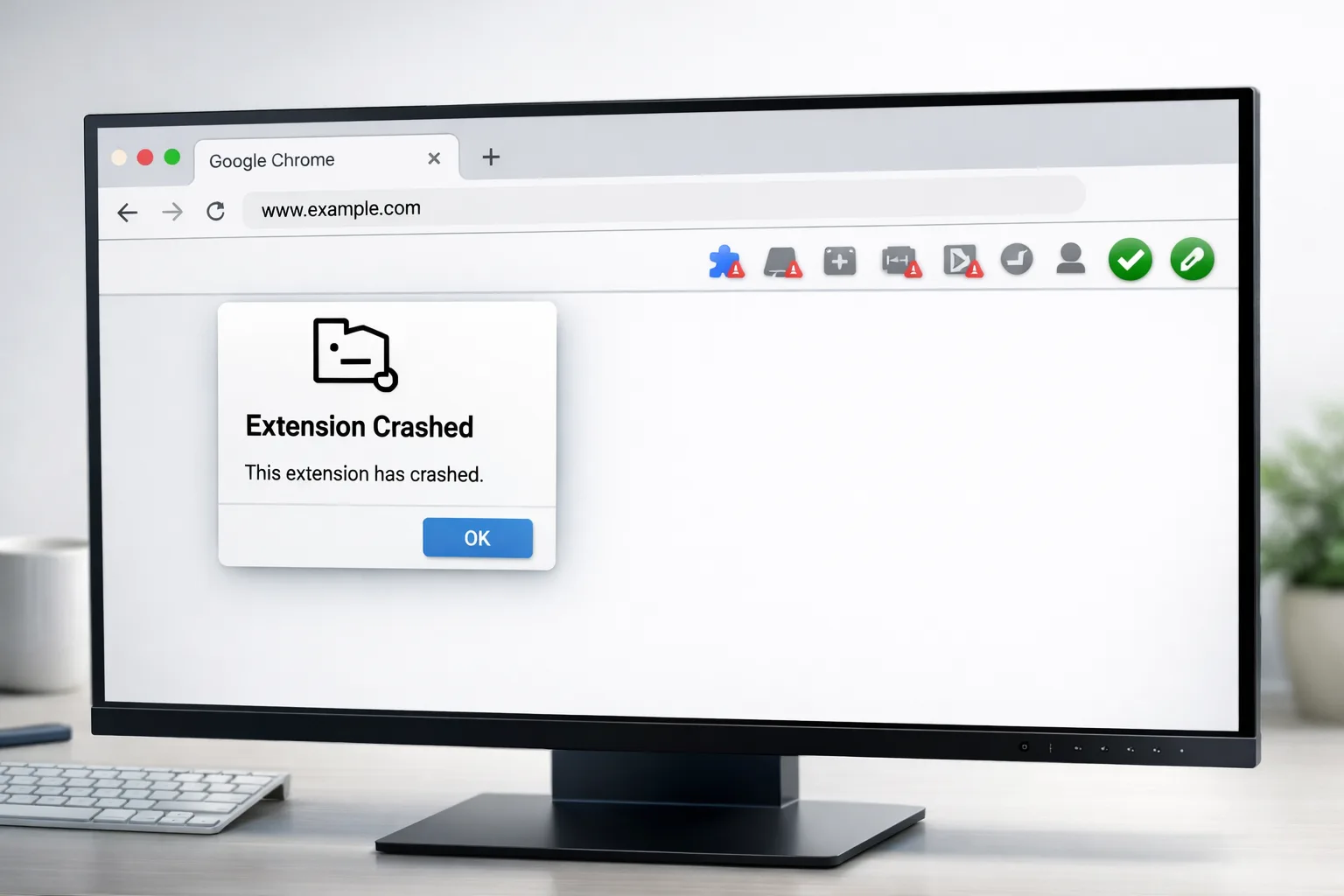
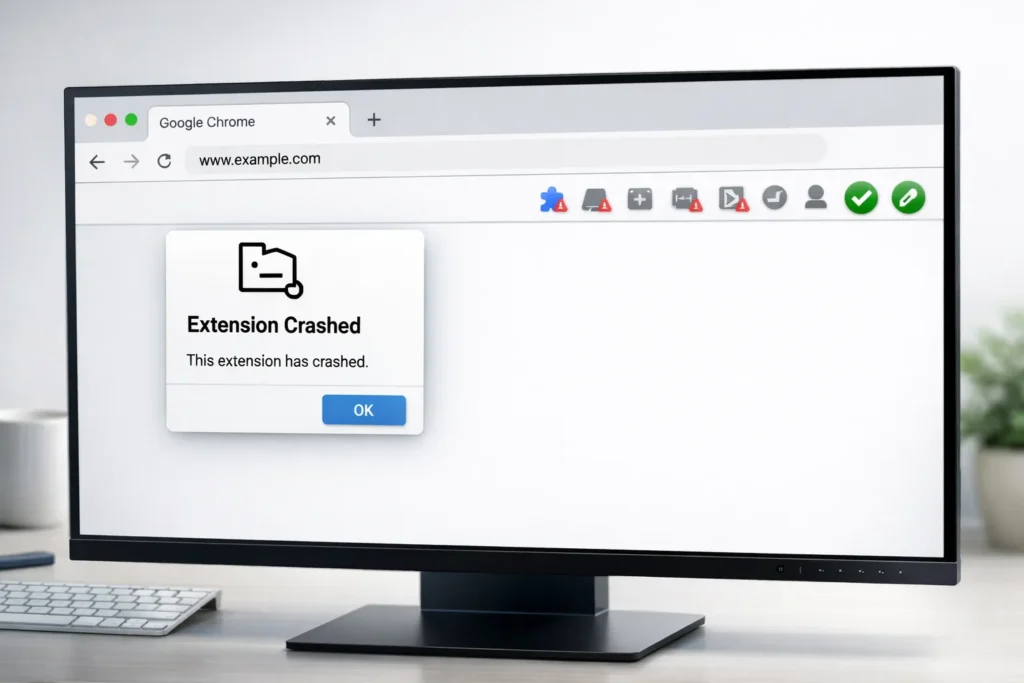
Chrome extensions not working is one of the most common and frustrating browser problems you can run into. One moment your ad blocker, password manager, or grammar tool is running perfectly — the next, it’s completely unresponsive, greyed out, or crashing on every click.
If your Chrome extensions stopped working after an update, after installing something new, or seemingly out of nowhere, you’re not alone. Millions of Chrome users face Chrome extension problems every single day.
The good news is that fixing Chrome extensions not working is usually quick and painless. This step-by-step guide covers every proven solution, from the simplest to the most advanced. No technical skills needed — just follow along.
Quick Answer
If your Chrome extensions are not working, start by fully restarting Chrome (close it and end all Chrome processes in Task Manager). Then go to chrome://extensions and make sure each extension is toggled on. If the problem remains, clear your browser cache, update Chrome to the latest version, and reinstall the broken extension. These steps fix Chrome extensions for 90% of users.
Why Chrome Extensions Stop Working {#why-this-problem-happens}
Before jumping into fixes, it helps to understand why Chrome extensions stop working in the first place. Knowing the cause helps you pick the right solution faster.
Here are the most common reasons your extensions are not working in Chrome:
- Outdated Chrome browser — Older versions of Chrome lose compatibility with newer extensions. This is the #1 cause of Chrome extensions not loading.
- Outdated or buggy extension — The extension developer may have released a broken update, or the extension hasn’t been maintained.
- Corrupted browser cache — Stored temporary data can become corrupted over time and block extensions from functioning.
- Extension conflicts — Two or more extensions can clash, causing one or both to break. This is a frequent cause of Chrome extensions crashing.
- Wrong permissions — Some extensions need specific site permissions. Without them, the extension appears broken in Chrome.
- Chrome policy restrictions — On work or school computers (Windows, Chromebooks), IT administrators often block or limit extensions.
- Hardware acceleration conflicts — Chrome’s GPU acceleration feature sometimes interferes with extension rendering.
- Corrupted user profile — Over time, your Chrome profile data can become damaged, causing persistent Chrome extension problems.
How to Fix Chrome Extensions Not Working (12 Step-by-Step Methods) {#how-to-fix}
We’ve arranged these fixes from easiest to most advanced. Start with Fix 1 and work your way down until your Chrome extensions not working issue is resolved.
Fix 1: Restart Google Chrome Completely
This is the fastest way to fix Chrome extensions that have suddenly stopped responding. A full restart clears temporary glitches in Chrome’s memory.
Steps:
- Close every Chrome window.
- On Windows: Press Ctrl + Shift + Esc to open Task Manager. Find every “Google Chrome” process listed and click End Task on each one.
- On Mac: Press Cmd + Q to fully quit Chrome.
- Wait 10 seconds.
- Reopen Chrome and test your extensions.
Why this works: Chrome often keeps background processes running even after you close the window. These zombie processes can prevent extensions from loading properly. Killing them forces a truly fresh start.
Fix 2: Check If Extensions Are Enabled
Sometimes Chrome extensions appear greyed out or toggled off after a browser update. You might not even notice they’ve been disabled.
Steps:
- Open Chrome.
- Type chrome://extensions in the address bar and press Enter.
- Look at each extension on the page.
- Make sure the blue toggle switch is turned ON for each extension you want to use.
- If any extension is toggled off (grey), click the toggle to enable it.
Why this works: Chrome updates and crashes can automatically disable extensions as a safety measure. Manually re-enabling them is often all you need to repair Chrome extensions.
Fix 3: Update Google Chrome
Running an outdated browser is one of the top reasons Chrome extensions are not working. Extension developers build for the latest Chrome version, so falling behind creates compatibility gaps.
Steps:
- Click the three-dot menu (⋮) in Chrome’s top-right corner.
- Navigate to Help > About Google Chrome.
- Chrome will automatically check for and download updates.
- Click Relaunch when the update is complete.
- Test your extensions.
Device note: This works the same on Windows 10, Windows 11, and Mac. On Chromebooks, go to Settings > About ChromeOS > Check for updates.
Fix 4: Update the Extension Itself
Your Chrome browser might be current, but the extension itself may need an update to keep working.
Steps:
- Go to chrome://extensions in your address bar.
- In the top-right corner, turn on Developer mode (toggle switch).
- Click the Update button that appears at the top of the page.
- Wait for Chrome to check all extensions for updates.
- Turn Developer mode back off.
- Test the extension.
Why this works: Chrome doesn’t always update extensions immediately. Forcing a manual update ensures you’re running the latest compatible version, which often resolves Chrome extensions not loading issues.
Fix 5: Clear Browser Cache and Cookies
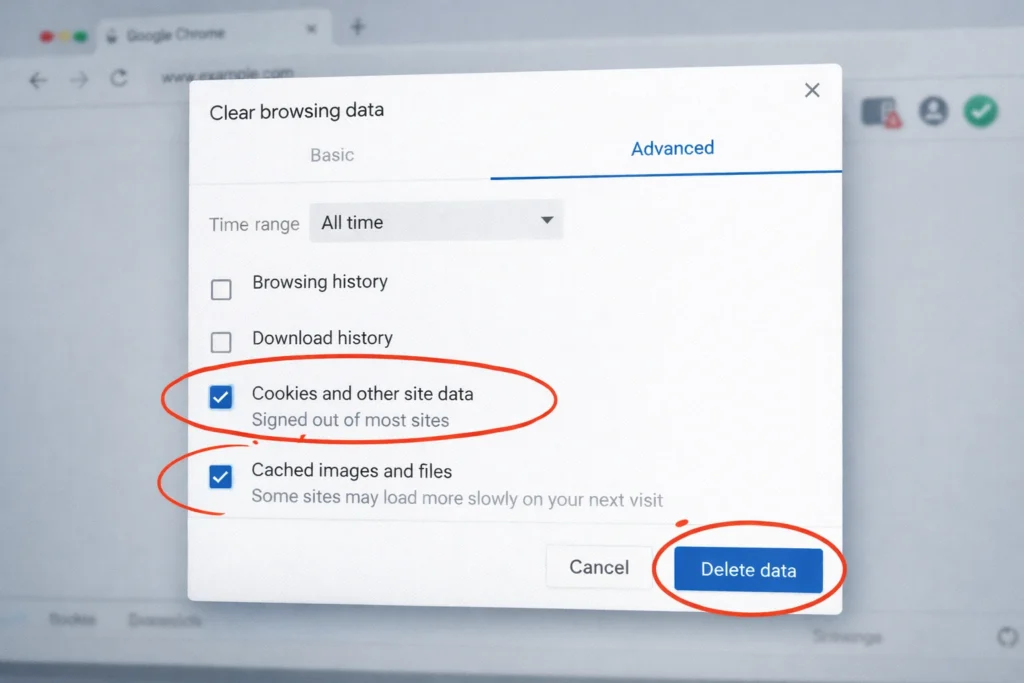
Corrupted cache files are a silent killer. They can block extensions from loading, cause Chrome extensions to crash, and create all kinds of unpredictable behavior.
Steps:
- Press Ctrl + Shift + Delete (Windows) or Cmd + Shift + Delete (Mac).
- Set the Time range to All time.
- Check these boxes:
- ✅ Cached images and files
- ✅ Cookies and other site data
- Click Delete data.
- Restart Chrome completely (see Fix 1).
- Test your extensions.
⚠️ Important: Clearing cookies will sign you out of most websites. Make sure you know your passwords before doing this step.
Fix 6: Disable Conflicting Extensions
If you have many extensions installed, there’s a good chance two of them are conflicting. This is a very common cause of Chrome extension problems that users overlook.
Steps:
- Go to chrome://extensions.
- Toggle OFF every single extension.
- Re-enable them one at a time.
- After enabling each extension, test Chrome for a few minutes.
- When the problem returns, you’ve found the conflicting extension.
- Remove or replace the problematic extension.
Pro tip: Extensions that do similar things (like two ad blockers or two VPN extensions) are the most likely to conflict with each other.
Fix 7: Check Extension Permissions
If a specific extension works on some websites but not on others, the issue is almost certainly a permissions problem. Chrome gives you granular control over where extensions can run.
Steps:
- Go to chrome://extensions.
- Find the extension that’s not working and click Details.
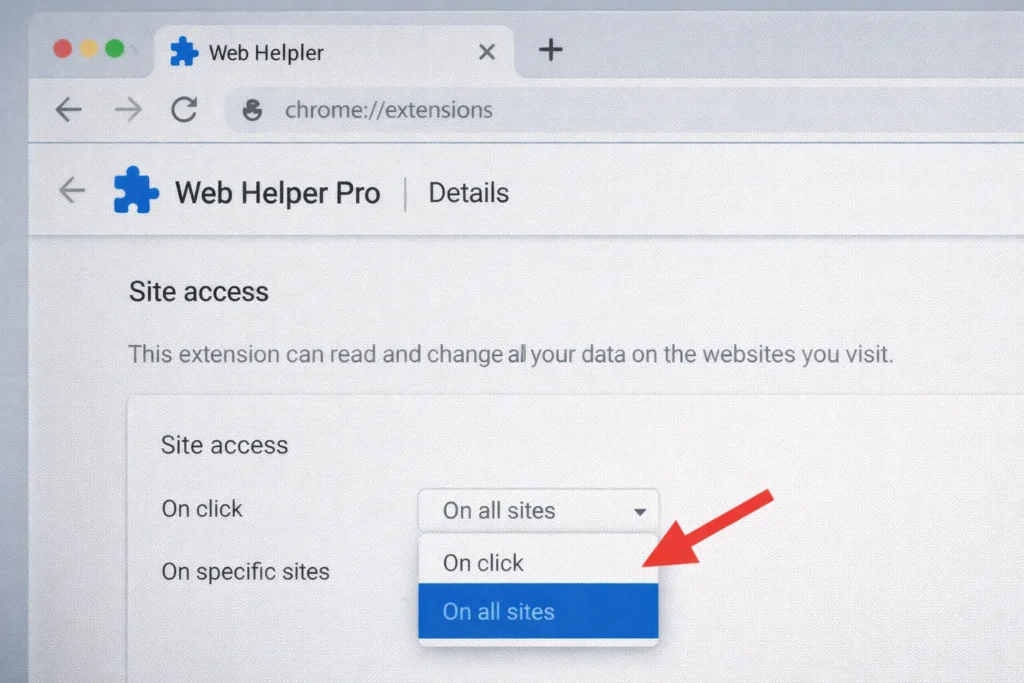
- Scroll down to the Site access section.
- Change the setting to one of these:
- On all sites — the extension works everywhere
- On specific sites — add the URL where it’s not working
- Click back and test the extension.
Fix 8: Disable Hardware Acceleration
Chrome uses your computer’s GPU (graphics card) to speed up page rendering. However, this feature sometimes conflicts with extensions, especially those with visual overlays, pop-ups, or toolbars. Turning it off can fix Chrome extensions not working instantly.
Steps:
- Click the three-dot menu (⋮) > Settings.
- Click System in the left sidebar.
- Toggle OFF the option: Use hardware acceleration when available.
- Click Relaunch.
- Test your extensions.
Why this works: Some Chrome extensions crash because they can’t render their visual elements through GPU acceleration. Switching to CPU rendering provides more stable performance.
Device note: This fix is especially effective on older Windows laptops and budget PCs with weak GPUs.
Fix 9: Reset Chrome Settings to Default
If you’ve tried everything above and your Chrome extensions are still not working, resetting Chrome clears deeper configuration issues without deleting your bookmarks or saved passwords.
Steps:
- Type chrome://settings/reset in the address bar.
- Click Restore settings to their original defaults.
- Read the warning and click Reset settings to confirm.
- Go to chrome://extensions and re-enable your extensions one by one.
What this resets:
- Disables all extensions (you re-enable them manually)
- Clears temporary data and site settings
- Resets homepage, new tab page, and search engine
What it keeps:
- Bookmarks
- Saved passwords
- Browsing history
Fix 10: Create a New Chrome Profile
A corrupted Chrome profile can cause persistent extension problems in Chrome that no other fix can resolve. Creating a new profile lets you test whether your profile is the root cause.
Steps:
- Click your profile picture in Chrome’s top-right corner.
- Click Add (or the + icon).
- Choose a name and color for the new profile.
- In the new profile, install the problematic extension from the Chrome Web Store.
- Test if it works.
If the extension works in the new profile: Your old profile is corrupted. You can migrate your bookmarks and passwords to the new profile and start using it as your main one.
Fix 11: Reinstall the Extension
Sometimes extension files become corrupted during installation or after a failed update. A clean reinstall gives you a fresh copy.
Steps:
- Go to chrome://extensions.
- Find the broken extension.
- Click Remove and confirm.
- Open the Chrome Web Store.
- Search for the extension by name.
- Click Add to Chrome.
- Confirm the installation and test.
Why this works: Reinstalling replaces all corrupted files with clean, current versions. This is one of the most reliable ways to fix Chrome extensions that have stopped loading.
Fix 12: Reinstall Google Chrome (Last Resort)
If absolutely nothing has worked, a complete Chrome reinstall will resolve even the deepest Chrome extension problems. This is the nuclear option — use it only after trying everything else.
Steps:
- Back up your bookmarks: Go to Bookmarks > Bookmark Manager > three-dot menu > Export bookmarks.
- Uninstall Chrome:
- Windows 10/11: Settings > Apps > Apps & Features > Google Chrome > Uninstall
- Mac: Drag Chrome from the Applications folder to Trash
- Download a fresh copy from google.com/chrome.
- Install Chrome and sign in with your Google account.
- Your bookmarks, passwords, and history will sync back automatically (if sync was enabled).
- Reinstall your extensions from the Chrome Web Store.
🔧 Troubleshooting Tips {#troubleshooting-tips}
| Tip | Details |
|---|---|
| One extension or all? | If only one extension is broken, the problem is with that specific extension. If all extensions stopped working, it’s a browser-level issue. |
| Test in Incognito | Press Ctrl+Shift+N. Enable the extension for Incognito in its settings, then test. If it works, your profile is likely corrupted. |
| Check Chrome flags | Type chrome://flags in the address bar. If you’ve changed experimental settings before, click Reset all at the top. Modified flags can cause Chrome extensions to stop working. |
| Work/school computer? | Your IT administrator may block extensions through Chrome policies. Contact your IT department for help. |
| Check extension status page | Some popular extensions (like LastPass or Grammarly) have status pages where they report known outages. |
Common Mistakes to Avoid {#common-mistakes}
🚫 Installing extensions from outside the Chrome Web Store. Sideloaded extensions are unstable and a security risk. They’re also the most likely to cause Chrome extensions not working issues.
🚫 Running 20+ extensions simultaneously. Every extension consumes memory and processing power. The more you run, the higher the chance of conflicts and crashes.
🚫 Ignoring Chrome update notifications. Outdated Chrome is the single biggest cause of Chrome extensions not loading. Always update promptly.
🚫 Skipping the easy fixes. Don’t jump straight to reinstalling Chrome. A simple restart or cache clear solves the problem for most people.
🚫 Granting unnecessary permissions. Some shady extensions request access they don’t need. Only install extensions from trusted developers with good ratings.
🚫 Never restarting Chrome. If you keep Chrome running for weeks without restarting, memory leaks and process errors accumulate, leading to extensions crashing in Chrome.
Additional Tips to Prevent Chrome Extension Problems {#prevention-tips}
Prevention is always better than repair. Follow these habits to avoid Chrome extensions not working in the future:
- Keep Chrome updated at all times. Go to Help > About Google Chrome regularly, or enable automatic updates.
- Audit your extensions monthly. Visit chrome://extensions and remove anything you no longer use. Fewer extensions mean fewer problems.
- Only install extensions with 4+ star ratings and thousands of reviews from the Chrome Web Store.
- Restart Chrome at least once a week. This clears memory leaks and refreshes all extension processes.
- Use Chrome’s built-in cleanup tool (Windows). Go to Settings > Advanced > Reset and clean up > Clean up computer. This scans for harmful software that might interfere with extensions.
- Enable Chrome Sync. If you ever need to reinstall Chrome, Sync ensures your extensions, bookmarks, and settings are automatically restored.
Frequently Asked Questions {#faqs}
Why are my Chrome extensions suddenly not working?
The most common reason Chrome extensions suddenly stop working is a Chrome browser update that creates compatibility issues. Extensions may also break due to corrupted cache files, extension conflicts, or a damaged Chrome profile. Start by restarting Chrome, clearing your cache, and updating both Chrome and the extension.
How do I re-enable extensions in Chrome?
Type chrome://extensions in your address bar and press Enter. You’ll see all your installed extensions listed with toggle switches. Click the toggle to turn on any extension that’s been disabled. If the extension is greyed out in Chrome, toggling it back on should bring it back to life.
Do Chrome extensions work in Incognito mode?
No, Chrome extensions are disabled in Incognito mode by default. To enable a specific extension in Incognito, go to chrome://extensions, click Details on the extension, and toggle on Allow in Incognito. This is also a useful troubleshooting step for diagnosing profile corruption issues.
Can too many Chrome extensions cause the browser to crash?
Absolutely. Each extension uses RAM and CPU resources. Running too many extensions at once can slow Chrome dramatically, cause individual extensions to stop working, and even crash the entire browser. We recommend keeping only the extensions you actively use and removing the rest.
How do I fix Chrome extensions not working on Windows 11?
The fixes are the same as outlined in this guide. On Windows 11 specifically, also make sure to:
- Open Task Manager (Ctrl+Shift+Esc) and end all lingering Chrome processes before restarting.
- Check if your organization has applied Chrome policies that block extensions (common on work devices).
- Run Chrome’s built-in cleanup tool: Settings > Reset and clean up > Clean up computer.
Conclusion
Chrome extensions not working is incredibly common, but it’s almost always fixable with the methods in this guide. Start with the basics — restart Chrome, make sure extensions are enabled, clear your cache, and update everything. These simple steps resolve the issue for the vast majority of users.
For stubborn cases where Chrome extensions keep crashing or refusing to load, move on to resetting Chrome settings, creating a new profile, or doing a clean reinstall as a last resort.
The key to preventing Chrome extension problems long-term is simple: keep your browser updated, limit the number of extensions you run, and restart Chrome regularly.
Bookmark this page so you have it ready the next time your Chrome extensions stop working. You’ll have them running again in minutes.
- Google Chrome Help — Install and Manage Extensions — Google Support
- Google Chrome Help — Update Google Chrome — Google Support
- Microsoft Support — Troubleshoot Browser Issues on Windows — Microsoft Support
[…] Chrome Extensions Not Working? 12 Easy Fixes That Actually Work (2026 Guide) […]