Physical Address
304 North Cardinal St.
Dorchester Center, MA 02124
Physical Address
304 North Cardinal St.
Dorchester Center, MA 02124

Is your computer running slow, overheating, or making loud fan noises? Chrome using too much CPU is most likely the reason. This is one of the most common complaints from Google Chrome users worldwide, and it affects both Windows and Mac computers.
When Chrome high CPU usage happens, your entire system suffers. Programs freeze, your battery drains faster, and even simple tasks become painfully slow. The problem gets worse the longer you ignore it, because Chrome continues hogging your processor in the background.
But here is the good news — fixing Chrome using too much CPU is easier than you think. This guide walks you through 12 proven methods to reduce Chrome CPU usage quickly, even if you have zero technical experience. Let’s solve this right now.
The fastest way to fix Chrome using too much CPU is to press Shift + Esc to open Chrome’s built-in Task Manager. Find the tab or extension consuming the most CPU and close it. Then disable unnecessary extensions, update Chrome to the latest version, and turn off hardware acceleration. These steps resolve Chrome high CPU usage for most users in under five minutes.
Before you fix the problem, it helps to understand why Chrome uses too much CPU in the first place. Chrome is built to be powerful, but that power comes at a cost. Here are the top reasons for Chrome high CPU usage:
Now that you know why Chrome uses so much CPU, let’s fix it.
The first step to fix Chrome high CPU is finding what is causing the spike. Chrome has a built-in Task Manager for exactly this purpose.
This instantly kills the process causing Chrome to use too much CPU. Check if your system speeds up immediately.
Open tabs are the number one reason for Chrome high CPU usage. Each tab consumes processor power, even when sitting idle.
Rule of thumb: Keep 10 or fewer tabs open to reduce Chrome CPU usage significantly.
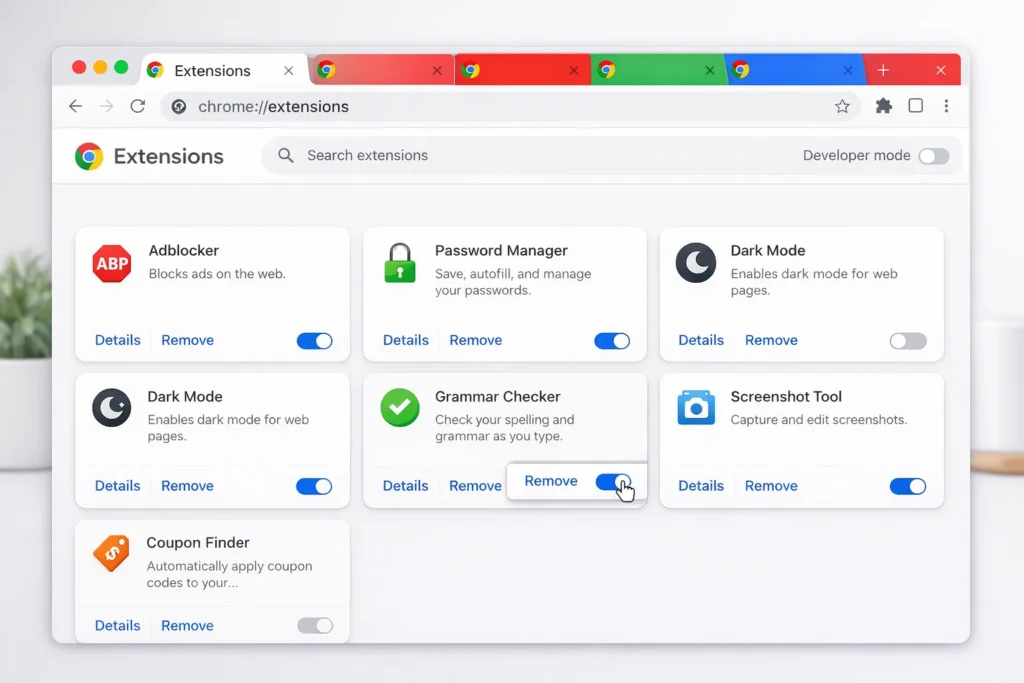
Extensions are a hidden cause of Chrome using too much CPU. Many run background scripts that eat processor resources constantly.
Pro tip: Keep a maximum of 3–5 essential extensions to prevent Chrome high CPU usage.
Running an outdated browser is a common cause of Chrome using too much CPU. Google frequently releases updates that fix CPU-related bugs.
Always keep Chrome updated. This single step prevents many Chrome high CPU problems before they start.
Hardware acceleration is meant to improve performance, but it often causes Chrome CPU usage too high on older or low-end computers.
After disabling this, test your computer. Many users report this alone fixes Chrome using too much CPU.
Websites with auto-playing videos are notorious for causing Chrome high CPU usage without your permission.
Blocking auto-play is an easy way to stop Chrome from using too much CPU on media-heavy websites.
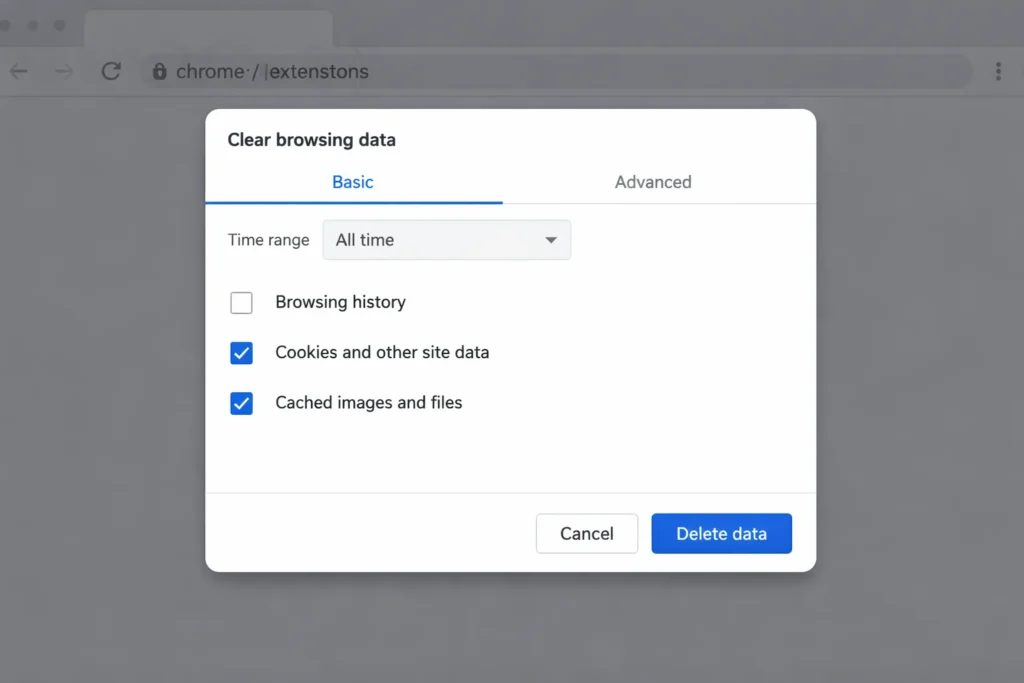
A bloated cache forces Chrome to work harder, leading to increased Chrome CPU usage over time.
Clearing cache regularly helps reduce Chrome CPU usage and keeps the browser running lean.
Malware is a sneaky cause of Chrome using too much CPU. Malicious scripts can run inside Chrome without any visible signs.
Always rule out malware when troubleshooting Chrome high CPU usage.
If Chrome CPU usage is still too high after trying the fixes above, resetting Chrome to its default state can help.
This disables all extensions, clears temporary data, and resets preferences. Your bookmarks and saved passwords stay safe. This is one of the most effective ways to fix Chrome high CPU caused by corrupted settings.
A corrupted user profile silently causes Chrome to use too much CPU in the background.
If the new profile runs smoothly, your old profile was the problem.
Chrome can run background processes even after you close the browser, which contributes to persistent Chrome high CPU usage.
This ensures Chrome completely stops when you close it, preventing unnecessary CPU usage.
Google added a built-in feature specifically to help reduce Chrome CPU usage.
Memory Saver mode is Google’s own answer to the Chrome using too much CPU problem. Enable it and leave it on permanently.
Prevention is better than cure. Follow these habits to stop Chrome from using too much CPU in the future:
Use this checklist whenever Chrome is using too much CPU:
✅ Open Chrome Task Manager first (Shift + Esc) — always start here.
✅ Test in Incognito Mode (Ctrl + Shift + N). If CPU is normal, an extension is causing the problem.
✅ Open your system Task Manager (Ctrl + Shift + Esc on Windows) to see Chrome’s total CPU percentage.
✅ Apply one fix at a time and restart Chrome between changes.
✅ If Chrome consistently uses over 80% CPU, uninstall and reinstall Chrome completely.
✅ Check if the problem occurs on specific websites — some sites are poorly optimized and will always cause Chrome high CPU usage.
Chrome runs each tab and extension as a separate process for better security and stability. This architecture is why Chrome uses too much CPU compared to lighter browsers. Closing unused tabs and extensions is the fastest way to reduce Chrome CPU usage.
No. Short spikes during video playback or heavy web apps are normal, but sustained 100% CPU means something is wrong. Follow the 12 fixes in this guide to resolve Chrome high CPU usage and bring your system back to normal.
Not directly. RAM and CPU are different resources. Extra RAM helps with memory problems, but it will not fix Chrome high CPU usage. Focus on closing tabs, removing extensions, and updating Chrome instead.
The same fixes apply. Open Activity Monitor (search in Spotlight) to check CPU usage. Then use Chrome Task Manager, disable extensions, update Chrome, and turn off hardware acceleration. These steps fix Chrome using too much CPU on both Mac and Windows.
Try every fix in this guide first. Most Chrome high CPU usage problems are completely solvable. However, if you use an older or underpowered computer and the problem persists, lightweight alternatives like Firefox or Microsoft Edge may work better for your hardware.
Chrome using too much CPU is a frustrating but completely fixable problem. Start with Chrome Task Manager (Shift + Esc) to find the root cause. Then systematically work through the 12 fixes: close extra tabs, remove heavy extensions, update Chrome, disable hardware acceleration, clear cache, scan for malware, and enable Memory Saver mode.
These steps fix Chrome high CPU usage for the vast majority of users. Adopt the prevention tips to keep Chrome running efficiently long-term. Bookmark this guide so you can come back to it anytime Chrome CPU usage spikes again.
Your computer deserves to run fast — and now you know exactly how to make that happen.